Updated: October 26, 2026
Why performing arts organizations need video, and why it is harder than it looks
Miami has a deep performing arts scene: community theaters, youth orchestras, dance companies, choirs, Latin music programs, children's theater and arts education nonprofits that bring music and dance into schools. Almost all of them need video. Funders want to see the work. Audiences decide what to buy tickets for on their phones. Grant reports ask for evidence of impact on students. And the performance itself, which may run for three nights and then disappear, is the thing the organization most wants to keep.
Filming performance is a specialized job. Stage lighting is built for the eye in a dark theater, not for a camera. Sound in a hall is complicated. And there are rights questions (music, choreography, scripts, union agreements) that do not come up when filming a food bank. This guide explains how video for performing arts nonprofits works in Miami: the types of video to make, how rehearsals and performances are filmed, the rights to clear, and how to get a fundraising film out of it.
Four types of video an arts nonprofit needs
| Type | Purpose | Where it is filmed |
|---|---|---|
| Performance archive | A full, unedited record of the show for the company, choreographers and grant reports | Performance or dress rehearsal, fixed cameras |
| Promotional trailer | 30 to 90 seconds to sell tickets for a season or production | Dress rehearsal, rehearsal studio, short staged shots |
| Education and impact film | Shows the program's effect on students or the community | Classrooms, workshops, rehearsals, interviews |
| Fundraising film | Makes the case for support at a gala, in a campaign or to major donors | Everything above, plus interviews with artists, parents and board |
One well planned production period can feed all four. The mistake is to film the show without planning the rest, and then find there are no interviews, no close ups of students and no footage of the teaching that funders care about.
Filming rehearsals
Rehearsals are where the most honest material comes from: the director giving notes, a young dancer getting a step right on the fifth try, the conductor stopping the orchestra, the laughter in a table read. Rehearsal footage makes a fundraising film feel real, because it shows the work, the discipline and the teaching.
- Agree with the director which rehearsals the crew may attend and where the camera may stand.
- Keep the crew very small, one operator and a sound person at most, and stay out of sight lines.
- Use available light where possible; rehearsal rooms with big windows in the afternoon look good.
- Film short interviews with artists and students on breaks, not during working time.
Filming the performance
For most small and mid-sized companies the best approach is to film the final dress rehearsal as if it were a performance, with no audience, so cameras can move closer and on stage angles are possible, and then film one live performance from fixed positions for the archive and audience reactions.
Cameras
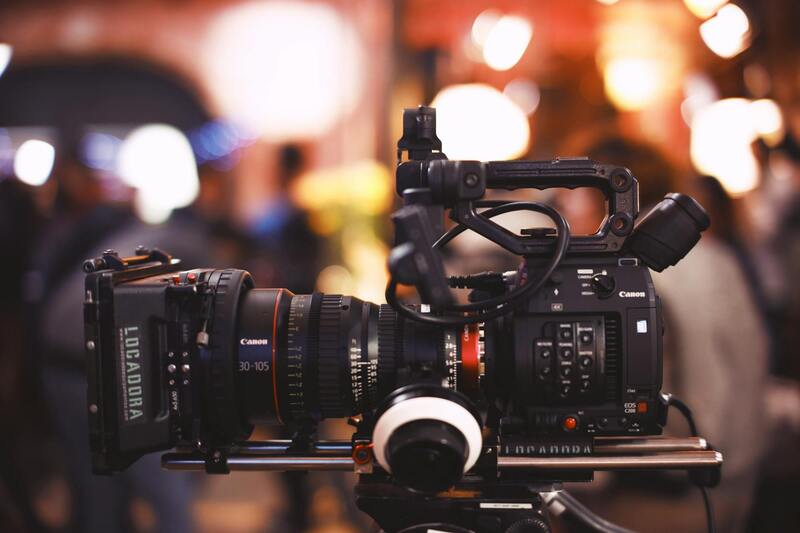
A wide camera locked off from the back of the house gives the full stage for the archive and for choreographers. Two more operated cameras, one from each side of the house, get medium shots and close ups. For dance, the wide shot is not optional: choreographers need to see the whole body and the whole stage.
Light
Stage lighting changes quickly, with deep shadows, colored gels, and follow spots that are much brighter than the rest of the stage. Cameras need manual exposure, set by someone who watched the lighting cues at a technical rehearsal. Talk to the lighting designer: sometimes a small increase in the general wash for the recorded dress rehearsal makes a big difference, and the designer decides whether that is acceptable.
Sound
Camera microphones in a hall record the room, the audience coughs and the air conditioning. For an orchestra or choir, a pair of good microphones placed above and in front of the ensemble gives the best result, plus a feed from the sound desk for musicals with body mics. Sound for dance usually comes from the playback track itself, with room mics for applause.
The rights you need to clear
This is the part most arts organizations underestimate. The right to perform a work in a theater does not automatically give you the right to record it or put it online.
- Licensed musicals and plays. The licensing agreement for a show usually restricts or forbids video recording and distribution. Check your license and ask the licensing house before filming anything beyond a short archival recording.
- Music. Recorded music used in a dance piece and compositions performed by an orchestra may be under copyright. Online use needs the right permissions; public domain works are simpler.
- Choreography. Choreographers generally own their work. Get written permission for recording and for each use (archive, promo, online).
- Union agreements. Professional actors, musicians and stage crew may be covered by union agreements with specific rules on recording. Ask your company manager or union representative before the shoot.
- Performers and students. Collect releases from every performer, and from parents or guardians for minors.
Plan the rights before you plan the cameras. For fundraising and grant reporting, footage of rehearsals, classes and interviews is often easier to clear than the performance itself.
Turning it into a fundraising film
A strong arts fundraising film usually follows one student, one artist or one production from first rehearsal to opening night, with interviews that explain what the program changes. Show the teaching and the effort, then the payoff on stage. Keep it to three to five minutes for a gala or an online campaign. The storytelling approach in our guide to impact story video production works well here, and the charity event video guide covers filming the gala itself.
If the film supports a scholarship or tuition assistance program, our article on scholarship impact video explains how to show donors the students their gifts support while protecting the students' privacy.
Social clips between productions
A performing arts company has long quiet stretches between shows, and audiences forget. Short clips from rehearsals, a thirty second interview with a lead dancer, a student's first solo, a musician explaining an instrument, keep the organization visible all season. Film a small library of these during the main production period and release them one or two a week in the run-up to the next show. Check the rights for each clip, since a short excerpt of licensed music or choreography still needs permission.
Keeping costs manageable
- Film the dress rehearsal and one performance in the same week to share setup time.
- Plan interviews for a single afternoon at the rehearsal space.
- Ask the venue for power, a secure room for equipment and access to the sound desk ahead of time.
- Use the same footage for the trailer, the impact film and social clips.
More budgeting ideas are in our guide to producing nonprofit video on a tight budget.
Performing arts video with our Miami crew
We film rehearsals, performances and fundraising films for theaters, dance companies, orchestras, choirs and arts education programs across Miami-Dade and Broward. We attend a technical rehearsal before the shoot, work with your lighting and sound teams, keep crews small in the rehearsal room and help you think through the rights before a camera is switched on. From one production period you can get an archive recording, a trailer, an impact film and short clips for social media, priced with nonprofit budgets in mind.
Tell us about your next production and the rehearsals and performances you want filmed through our contact page. More about how we work with mission-driven organizations is on the about page.