Updated: October 26, 2026
Food assistance work is hard to film well
Food banks, pantries, soup kitchens and meal delivery programs in Miami-Dade do some of the most visible work in the nonprofit sector. There are trucks, pallets, long tables of volunteers and lines of cars on distribution day. It looks easy to film. The difficulty is everything around it: the people receiving food did not come to be on camera, the warehouse is a working industrial space, and a video of boxes being handed over says little about why the work matters or what a donation actually changes.
This guide covers video production for food banks and meal programs in Miami. It explains what to film at distributions and in the warehouse, how to protect the privacy of clients, how to involve volunteers and corporate groups, and which videos help with donations, food drives and volunteer sign-ups. It is written for development, communications and operations staff at hunger-relief organizations, from regional food banks to small church pantries.
Start with the people who receive food
The first rule is simple: people come to a food distribution to get groceries for their family, not to appear in a fundraising video. Many feel embarrassed to be there. Some have immigration concerns. Some are seniors who do not want neighbors or relatives to see them in line. A camera in their face can make them leave without food.
- Film clients only with explicit, informed consent, collected by staff who know them, before the camera comes near. Explain where the video will be used in plain language and in their preferred language.
- Default to not showing faces in lines. Hands, boxes, car trunks and volunteers' faces tell the distribution story without exposing anyone.
- No license plates. Drive-through distributions put plates in nearly every frame. Shoot from angles that avoid them or blur them in the edit.
- Interviews by invitation. If a client wants to share their experience, film them away from the line, at a time and place that suits them, and let them see the cut.
We go into this more broadly in our article on filming the people you serve with consent and dignity. For food programs, it needs to be the first item on the shot list.
What to film at a distribution day
Distribution days give you energy and scale. The trick is to show the organization working well, so donors trust that their money is used carefully.
Shots that work
- The setup before dawn: trucks backing in, pallets coming off, tables going up.
- Volunteers in matching shirts forming a line to load cars, filmed wide to show scale and tight on hands and smiles.
- The fresh produce. Bananas, greens and milk say "healthy food" faster than any narration.
- Staff coordinating with radios and clipboards, showing that this is a run operation.
- The empty lot at the end, after everything is gone. It tells the viewer how much was needed.
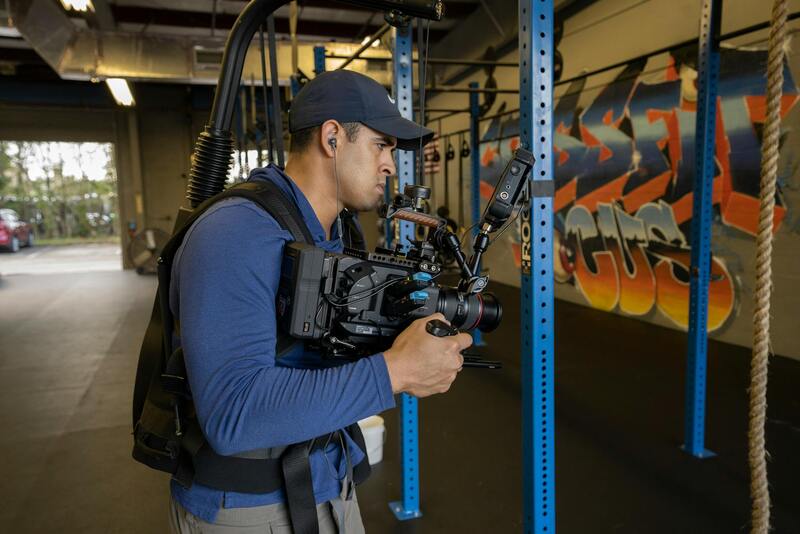
In summer, distributions in Miami start early to beat the heat, and so does the crew. We bring water, keep the setup light and stay out of the traffic flow. A single camera operator with a gimbal and a second person on sound and releases is usually enough.
Inside the warehouse
For a food bank, the warehouse is the engine. Donors often have no idea how food moves from a grocery chain's distribution center or a farm to a family's kitchen. A short tour film can explain it in a way that a written report cannot.
Warehouses have their own rules. Forklifts have right of way, safety vests are mandatory, and cold rooms are cold. Any filming plan should be approved by the warehouse or operations manager, and the crew should get the same safety briefing as volunteers. Cameras moving from the Miami heat into a freezer will fog, so we let gear sit in a cool zone first.
| Area | What it shows donors | Filming notes |
|---|---|---|
| Receiving dock | Where food donations and rescued food arrive | Film during a scheduled delivery, out of the forklift path |
| Sorting room | Volunteers checking dates and quality | Great for corporate volunteer groups, with releases |
| Cold storage | How fresh and frozen food is kept safe | Short visits, lenses acclimatized first |
| Packing lines | Senior boxes, weekend backpacks for children | Close shots of what goes in each box |
| Loading and trucks | Food going out to partner agencies | Pair with a partner pantry visit for the full story |
Volunteers, food drives and corporate groups
Food programs depend on volunteers more than almost any other nonprofit, and video helps recruit them. A 60 to 90 second clip showing what a shift actually involves, where to park, what to wear and how long it lasts answers questions that keep people from signing up. This connects with the approach in our articles on volunteer recruitment video and volunteer training video.
Corporate volunteer days are a second opportunity. Many Miami companies send teams to sort food as part of their community programs. With the company's agreement, a short clip of their team can serve both the food bank and the company's internal communications, which often makes it easier to secure the next donation. Food drive videos are simpler still: what to donate, what not to donate (glass jars, expired items, home-cooked food are common issues), and where to drop it off.
Videos that help food programs raise money
- The "how a dollar becomes a meal" explainer. One to two minutes on the supply chain, using your organization's own published figures only.
- Seasonal appeals. Holiday giving, summer when school meals stop, and after a hurricane when demand jumps. Footage shot in advance can be cut quickly when a storm hits.
- Partner agency stories. A church pantry or a senior center that receives food from you, told by the volunteers who run it.
- Program spotlights. Weekend backpack programs, mobile pantries, senior boxes or nutrition education classes, each in a short clip.
When you need a story-driven piece for a single program or a grant report, our guide to impact story video production shows how to build it around one person's experience.
Food bank and meal program video with our Miami team
We produce video for hunger-relief organizations across Miami-Dade and Broward, from large food banks to neighborhood pantries. We plan each shoot with your operations and client services teams, put client privacy first, follow the warehouse's safety rules, and keep the crew small enough to stay out of the way on a busy distribution day. One shoot can supply a donor explainer, a volunteer clip and a seasonal appeal, all delivered in the sizes your website, social channels and email tools need.
If you have a distribution day or a holiday appeal coming up, describe your program and your goals through our contact page. You can read about our approach to mission-driven work on the about page. The first conversation is usually about which days the warehouse is busiest and which clients might want to share their story.